Category: Oil Producers

The Biggest Oil Producers in Asia

Asia accounted for more than 9.2% of the world’s oil production in 2014. The region was led by China and India, the world’s fourth and 20th biggest oil-producing nations, respectively. In recent years, Asia’s share of world oil production has been on a slow but regular decline. This is primarily a consequence of flat regional oil production during a period of rising overall global output.
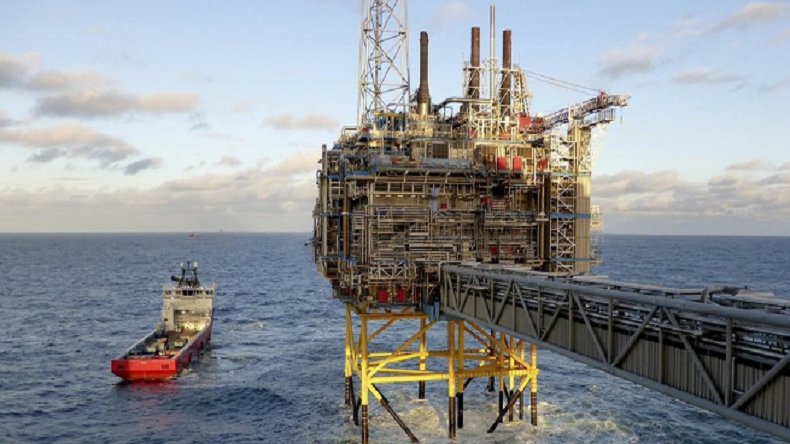
In the five years from 2010 to 2014, Asian oil output rose slightly from about 8.5 million barrels per day in 2010 to just over 8.6 million barrels per day in 2014. During the same period, world oil production grew more than 5%, from about 88.1 million barrels per day to about 93.1 million barrels per day. While a number of countries in the region have discovered large new reserves, others face declining production from aging oil fields. Consequently, analysts expect recent production trends to continue for the region as a whole.

1. China
China is the biggest oil producer in the region by a substantial margin, accounting for nearly 4.6 million barrels of oil per day in 2014. It is responsible for nearly 53% of Asia’s total production. According to the U.S. Energy Information Administration (EIA), Chinese oil production has grown every year since 1981 without exception. In the most recent five-year period from 2010 to 2014, production grew a total of about 4.6%.

The oil industry in China is led by several of the largest energy companies in the world: China Petroleum and Chemical Corporation, known as Sinopec; China National Offshore Oil Corporation, or CNOOC; and China National Petroleum Corporation, or CNPC. In 2014, these three companies combined to produce a total of over 1.4 billion barrels of oil in China, more than 85% of the country’s total annual production. In the same year, the companies combined to produce an additional 630 million barrels of oil in dozens of countries around the world.

2. India
India accounted for production of about 978,000 barrels of oil per day in 2014, the fifth year in a row daily production neared but did not clear the 1 million barrel mark. While production growth has essentially flatlined in recent years, oil consumption in India continues to grow by leaps and bounds. National oil consumption reached nearly 3.7 million barrels per day in 2013, the most recent year for which data is available. In the five years from 2009 to 2013, Indian oil consumption grew a total of more than 19.3%, far outpacing domestic production. As of 2013, India is the fourth largest oil importer in the world.

Oil production in India is dominated by the state-owned enterprise, Oil and Natural Gas Corporation, which accounted for roughly 60% of domestic production in 2013. An additional 27% of Indian oil is produced by Cairn India Limited, the Indian subsidiary of the British oil and gas company, Cairn Energy PLC.

3. Indonesia
Indonesia comes in just behind India with production of about 911,000 barrels per day in 2014. In the 1990s, when production was at a high, Indonesia produced between 1.5 million and 1.7 million barrels per day. Since that period, however, production has followed a nearly unbroken downward trend to the current level. In 2009, the combination of declining production in aging oil fields and rising domestic demand led Indonesia to exit Organization of the Petroleum Exporting Countries (OPEC), of which it had been a member since 1962.

PT Chevron Pacific Indonesia, a subsidiary of the American energy giant Chevron Corporation, is Indonesia’s biggest oil producer, accounting for about 40% of production in 2014. Indonesia’s state-owned energy company, PT Pertamina, was responsible for an additional 26% of the country’s production. Foreign oil companies including Total SA, ConocoPhillips Co. and CNOOC are also significant producers.

4. Malaysia
Malaysia produced about 697,000 barrels of oil per day in 2014, most of which was extracted from offshore fields. Over the course of more than two decades since 1991, production in the country fluctuated between 650,000 and 850,000 barrels per day. According to the U.S. EIA, recent downward production trends can be attributed largely to declining output on aging oil fields. The Malaysian government is responding by encouraging investment in recovery technology and new field development.

Petroliam Nasional Berhad, also known as Petronas, is Malaysia’s state-owned energy corporation. It controls all oil and gas resources in the country and is responsible for development of those assets. International integrated oil and gas companies, such as Exxon Mobil Corporation, Murphy Oil Corporation and Royal Dutch Shell plc, are involved with Petronas in oil production activities in Malaysia, including partnerships in enhanced oil recovery projects on aging oil fields.

5. Thailand
Oil production in Thailand has trended upward in recent years, rising from about 390,000 barrels per day in 2010 to nearly 502,000 barrels per day in 2014. This performance continues a nearly unbroken growth trend that began in 1980 when the country produced only 1,300 barrels per day. Despite this growth, Thailand must import large quantities of oil to meet its domestic demand. In 2013, Thailand consumed nearly 1.2 million barrels of oil per day, requiring net oil imports on the order of 700,000 per day to meet demand.

Chevron is the biggest oil producer in Thailand. It operates Thailand’s largest oil field, Benjamas, and has investments in many other important production sites in the country. Thailand’s state-owned oil company, PTT Exploration and Production, is the country’s second-largest oil producer. Other international companies involved in oil production in Thailand include Coastal Energy Company and Salamander Energy plc.

6. Vietnam
Vietnam has maintained oil production volumes between 300,000 and 400,000 barrels per day since 2000. Its daily production in 2014 amounted to about 316,000 barrels. In 2011, offshore exploration and drilling activities raised Vietnam’s proven oil reserves from 600 million barrels to 4.4 billion barrels, rocketing it into third place in Asia after China and India. Industry analysts expect further discoveries as exploration of Vietnam’s offshore waters continues.

Vietnam’s state-owned oil and gas company, PetroVietnam Gas Joint Stock Corporation, is involved in all oil production in Vietnam via its production subsidiary, PetroVietnam Exploration Production Corporation, and its joint ventures with international oil companies. Chevron, Exxon Mobil and the Russian company, Zarubezhneft OAO, are several of the largest international producers operating in Vietnam.

The Biggest Oil Producers in Africa

The African continent is home to five of the top 30 oil-producing countries in the world. It accounted for more than 8.7 million barrels per day in 2014, which is about 9.4% of world output for the year. This level of production is down somewhat from the heights of 2005 to 2010 when African production topped 10 million barrels per day, including a high of nearly 10.7 million barrels per day in 2010. As of 2015, declines are due mostly to political and civil instability and violence in many of Africa’s biggest oil-producing countries.

1. Nigeria
Nigeria produced more than 2.4 million barrels of oil per day in 2014 to rank as the 13th-largest oil producer in the world. The country has produced between 2.1 million and about 2.6 million barrels per day for the last 18 years. Fluctuations in annual oil production, especially since 2005, can be attributed largely to security problems connected to violent militant groups in the country. While Nigeria is home to the second-largest proven oil reserves in Africa, the U.S. Energy Information Administration (EIA) reports that security issues and other business risks in the country have reduced oil exploration efforts.

The state-owned Nigerian National Petroleum Corporation (NNPC) is responsible for regulating Nigeria’s oil and gas sector, and for developing its oil and gas assets. The NNPC relies heavily on international oil companies to fund development and provide expertise. Most large onshore oil production operations in the country are organized as joint ventures between the NNPC and private oil firms, with the NNPC as majority owner. Comparatively costly and complicated offshore oil developments are typically organized under production-sharing contracts, the terms of which can be adjusted to provide appropriate incentives to international operators. The largest international oil companies operating in Nigeria include Chevron Corporation, Exxon Mobil Corporation, Royal Dutch Shell plc, Total S.A. and Eni S.p.A.

2. Angola
Angola produced nearly 1.8 million barrels of oil per day in 2014, continuing a period of fluctuating production that began in 2009. Prior to 2009, the country achieved seven consecutive years of production gains in the oil sector, raising the average output from 742,000 barrels per day to nearly 2 million barrels per day. These gains were primarily the result of new production from deepwater oilfields offshore. Most oil production in Angola takes place offshore, as violence and conflict have limited exploration and production activities onshore.

The Sociedade Nacional de Combustiveis de Angola, also known as Sonangol, is Angola’s state-owned oil company. It oversees virtually all oil and gas development in the country. Most exploration and production operations in Angola are headed by international oil companies operating in joint ventures or under production-sharing agreements with Sonangol. Some of the biggest oil companies in Angola include Chevron Corporation, Exxon Mobil Corporation, Total S.A., Statoil ASA, Eni S.p.A. and China National Offshore Oil Corporation, also known as CNOOC.

3. Algeria
Algeria produced just over 1.7 million barrels of oil per day in 2014 to maintain its position among the top tier of African oil producers. However, 2014 marks the second consecutive year of falling production in the country, amounting to a total of more than 150,000 barrels per day of lost production. According to the EIA, these declines are primarily a result of delayed investments in new infrastructure and new production projects. In the nine years prior to 2013, Algerian oil production was fairly consistent, averaging around 1.9 million barrels per day. In addition to its substantial oil output, Algeria also ranks as the top natural gas producer in Africa.

Entreprise Nationale Sonatrach is Algeria’s state-owned oil and gas company. Under the Hydrocarbon Act of 2005 and its subsequent amendments, Sonatrach must retain a minimum of 51% equity in all oil and gas projects in the country. As of 2014, Sonatrach controls approximately 80% of oil and gas production in the country. International oil companies make up the remaining 20%, albeit through joint ventures and similar arrangements with Sonatrach. International oil majors involved in Algerian oil production include BP plc, Repsol S.A., Total S.A., Statoil ASA, Eni S.p.A. and Anadarko Petroleum Corporation.

4. Egypt
Egypt produced 668,000 barrels of oil per day in 2014, the fourth consecutive year of falling production. Declines totaled about 9.3% during that period, which is especially problematic given the 3% annual growth in oil consumption in the country during the last decade. According to the EIA, the decline in Egyptian production is mostly attributable to maturing oil fields. Exploration activities continue in the country in the hopes of boosting domestic production to keep up with ever-increasing domestic demand.

Egypt’s state-owned oil company, Egyptian General Petroleum Corporation (EGPC), controls all oil production in the country. EGPC partners with a number of international oil companies in offshore and onshore production operations in Egypt. Eni S.p.A. and BP plc are major shareholders in offshore Egyptian production assets. The American oil company Apache Corporation is a partner in production assets in Egypt’s Western Desert.

5. Libya
Libya produced about 516,000 barrels of oil per day in 2014, a decrease of more than 47% from the previous year. This decline was primarily a result of national protests that broke out in 2013. The country saw even more severe disruptions in oil supply during the Libyan civil war in 2011, when production declined from about 1.8 million barrels per day in 2010 to a daily average of 500,000 barrels the next year. Prior to 2011, Libya maintained oil production above 1.7 million barrels per day for six consecutive years. The country contains proven reserves of oil amounting to about 48 billion barrels, which is the most in Africa.

The state-owned National Oil Corporation has controlled the oil and gas sector in Libya for many years. However, the civil unrest in the country has precipitated a power struggle that has yet to be concluded as of September 2015. International oil companies were active in Libyan oil production prior to this period, but the future will remain cloudy until the instability is resolved. International oil companies with operations in Libya include ConocoPhillips Co., Repsol S.A., Total S.A., Eni S.p.A. and Occidental Petroleum Corporation.

The Biggest Oil Producers in the Middle East

The Biggest Oil Producers in the Middle East

The Middle East was responsible for producing nearly 27.9 million barrels of oil per day in 2014, about 30% of world production. The region includes four of the top eight oil-producing countries in the world and six of the top 14. Most oil production in the Middle East is dominated by state-owned enterprises. However, many international oil companies engage in oil production and related activities across the region through joint ventures, production-sharing agreements and other business models.

1. Saudi Arabia
Saudi Arabia produced more than 11.6 million barrels of oil per day in 2014, nearly 12.5% of world output or about one out of every eight barrels. The country ranked as the world’s biggest oil producer in the decade from 2003 to 2012, after which it fell to second place due to surging oil production in the United States. Saudi Arabia remains the world’s largest petroleum exporter. With proven oil reserves of about 266 billion barrels and relatively low production costs, Saudi Arabia should maintain its position as a top-three oil producer for the foreseeable future.

Saudi Arabia’s oil and gas industry is controlled by Saudi Aramco, which is itself controlled by Saudi Arabia’s Ministry of Petroleum and Mineral Resources and the Supreme Council for Petroleum and Minerals. Saudi Aramco is not publicly traded. Although international oil companies do not participate in oil production in Saudi Arabia, several companies partner with Saudi Aramco in joint-venture refineries and petrochemical plants in the country. These partners include Exxon Mobil Corporation, Royal Dutch Shell plc, Sumitomo Chemical Co., Ltd. and Total S.A.

2. United Arab Emirates
The United Arab Emirates (UAE) is a federation of seven emirates, including Dubai and the capital of the federation, Abu Dhabi. UAE produced nearly 3.5 million barrels of oil per day in 2014 to rank as the world’s sixth-biggest producer. Each of the seven emirates controls oil production within its borders. However, Abu Dhabi is home to about 94% of the proven oil reserves in UAE territory and, thus, it has an outsized role in establishing the federation’s oil policy.

The state-owned Abu Dhabi National Oil Company (ADNOC) controls oil production operations in Abu Dhabi under the direction of the emirate’s Supreme Petroleum Council. Most oil production in Abu Dhabi is organized under production-sharing agreements between ADNOC and international oil companies. Other emirates utilize similar production-sharing agreements and service contracts to organize oil production. Some of the biggest international companies involved in UAE oil production include BP plc, Royal Dutch Shell plc, Total S.A. and Exxon Mobil Corporation.

3. Iran
Iran produced about 3.4 million barrels of oil per day in 2014, the third consecutive year of depressed production. Prior to 2012, Iran produced more than 4 million barrels of oil per day for eight consecutive years. Most of the recent production downturn can be attributed to the effects of international economic sanctions placed on Iran during this period. According to the U.S. Energy Information Administration (EIA), sanctions have had especially severe effects on upstream oil and gas investment, including numerous cancelled investment projects.

In July 2015, Iran came to an agreement with the permanent members of the U.N. Security Council and Germany on the Joint Comprehensive Plan of Action (JCPOA), in which Iran agreed to strict limits on its nuclear program in exchange for the removal of international economic sanctions. As of September 2015, implementation of the agreement on Iran’s part is expected no earlier than the first half of 2016. Once Iran has met all of its initial obligations with respect to the JCPOA, sanctions are to be lifted.

Oil and gas production in Iran is controlled by the state-owned National Iranian Oil Company (NIOC) under the direction of the Supreme Energy Council. While the Iranian constitution bans private or foreign ownership of the country’s natural resources, international companies have historically participated in oil exploration and development in the country through buyback contracts, a contract model that does not convey equity rights to the international company. According to the EIA, Iran is in the process of developing new oil contract models to attract foreign investments once sanctions are lifted. Other reports suggest Iran plans to invite a number of international oil majors to do business in the country, including ConocoPhillips Co., Exxon Mobil Corporation, Royal Dutch Shell plc and Total S.A., among others.

4. Iraq
Iraq produced nearly 3.4 million barrels of oil per day in 2014, just a few thousand barrels per day fewer than Iran. The country has achieved production gains in every year since 2005, two years after the start of the Iraq War. Production in 2014 was higher than any other year since at least 1980, when the country produced just more than 2.5 million barrels per day. The EIA reports that ambitious development plans are in place to increase oil production in Iraq to as many as 9 million barrels per day by 2020. However, the country faces numerous challenges that could limit progress toward these goals, including political instability, continuing violence and inadequate infrastructure.

Oil production in most of Iraq falls under control of the Ministry of Oil in Baghdad. The Ministry operates through several state-owned companies, including the North Oil Company, the Midland Oil Company, the South Oil Company and the Missan Oil Company. In the autonomous Kurdistan region of Iraq, oil production is controlled by the local Ministry of Natural Resources. Well more than a dozen major international oil companies are involved in Iraqi oil production. U.S. and European oil majors include Exxon Mobil Corporation, Occidental Petroleum Corporation, BP plc, Royal Dutch Shell plc and Total S.A. Other international oil giants in Iraq include China National Petroleum Corporation, known as CNPC; China National Offshore Oil Corporation, known as CNOOC; Malaysia’s Petroliam Nasional Berhad, known as Petronas; and Gazprom Neft OAO.

5. Kuwait
Kuwait produced almost 2.8 million barrels of oil per day in 2014, placing it just outside the top 10 oil producers in the world. It has maintained consistent production of between about 2.5 million and 2.8 million barrels per day for more than a decade. However, according to the EIA, Kuwait has been struggling to raise production to 4 million barrels per day during this period, falling short due to inadequate foreign investment and related delays in new oil production projects.

The Ministry of Petroleum carries out oil policy in Kuwait through the state-owned Kuwait Petroleum Corporation and its subsidiaries. International oil companies have long been denied access to Kuwait because the Kuwaiti constitution does not allow foreign companies ownership stakes in Kuwaiti natural resources, or the revenues associated with those resources. This means standard joint ventures and production-sharing agreements used in other countries are outlawed in Kuwait.

In 1988, the Ministry of Petroleum spearheaded a plan to increase oil production in Kuwait by attracting international operators through the use of incentivized contract models allowable under the constitution. However, the country’s National Assembly, which is responsible for approving all such contractual agreements, is not fond of the program and has delayed its implementation for years.