Tag: Middle East

The Oil Industry in the Middle East of the 20th Century

The Middle East is a geographical center for the world oil industry. Oil is very important in foreign and domestic politics in almost every country in the region, oil importers and oil exporters. Therefore the oil industry in the Middle East has a special role in the economic development of the Middle East.

Discovery of the First Oil Field in the Middle East

The search for oil resources in the Middle East was first carried out by a British businessman named William D’Archy. In 1901, he was granted permission to explore oil in Iran, after offering a contract of 20,000 pounds sterling and 16% of profits for 60 years. Not only that, the company is also free of charge and obtained a large area.
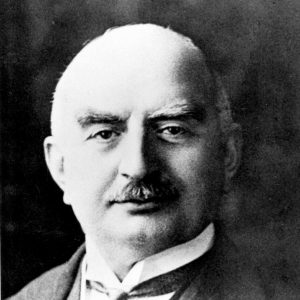
After obtaining permission, D’Archy sent George Reynold to explore oil resources. Exploration requires huge costs, so that at one time when he was on the verge of bankruptcy, D’Arcy asked for help from the British government. The government agreed to help him, for fear that he might sell his permission to a foreign country like Russia.

England was still a big power at that time. Therefore, they want to maintain political existence in the Middle East. To protect the contract with the Qajar Dynasty, the British Government pressured the British oil company Burmah Oil to provide financial assistance to D’Arcy in 1905.

New investment from Burmah Oil Co. saved this project. However, over the next few years the situation has not changed, oil resources have not yet been discovered.

This fruitless search results in D’AArcy’s personal wealth being completely used up. Even some oil source search staff were fired to reduce the budget needed.

Meanwhile, the British government and other financiers, seemed to be beginning to despair after seven years the project did not work. Therefore, on May 26, 1908 London sent an order to Reynold to carry out the last drilling effort around the Sulaiman Mosque with a depth of 1600 feet.

While drilling was underway, the smell of sulfur wafted in the air at Suleiman Mosque. That was a good sign for Reynolds. At 4 o’clock in the morning, the drill reaches 1,180 feet below the desert and touches where the oil is. As a result, oil sprayed as high as 75 feet into the air.

The place was so remote that it took five days before D’Arcy got word via telegram in England. “If this is true,” he replied, “all our problems are over.” The discovery is true and more other oil wells were found in Persia, including the discovery of a large oil well in September.

After that discovery, D’Arcy and Burmah reorganized their ownership in 1909 as Anglo-Persian Oil Co. (AIOC). Initial public offering of shares sold out in 30 minutes in London. The British government holds half of AIOC’s shares, Burmah Oil 22%, and the rest is held by a joint pool of investors.

Since news of oil discoveries in the Middle East spread, large countries have been racing to find oil fields in the Middle East.

Development of the Oil Industry in the Middle East
The first exploration permits set patterns in this region for the next half century. The petroleum industry is a vertical and horizontal monopoly. Western companies control oil prospecting, sourcing, transporting, refining, and selling.

Seven large companies or so-called “The Seven Sisters” eventually dominated the oil industry in the Middle East. They are Standard Oil of New Jersey (founded by John Rockefeller), Royal Dutch Shell, British Petroleum, Gulf, Socony-Mobil, Texaco, and Standard Oil of California. Many of these companies have the same owner and director or at least one family.

On the other hand, the Middle East Government is too weak, does not have the technology to develop the industry itself, so voluntarily gives permission to Western companies to exploit their vital natural resources.

The second largest oil permit in the Middle East was signed between Iraq and a consortium of Western companies. Calouste Gulbenkian became a negotiator who negotiated the permit in return for a 5 percent stake. As a result of this agreement, Gulbenkian was nicknamed “Mr. Five Percent “and became one of the richest people in the world at that time.

The company’s ownership is divided as follows: 25 percent owned by D’Arcy, consisting of Burmah and the British government which came to be known as British Petroleum (BP); 25 percent Compagnie Française des Petroles (CFP), where the French government owns 40 percent; 25 percent of Royal Dutch Shell, consisting of British and Dutch interests; and 25 percent U.S. gas, including Standard Oil of New Jersey and Socony Mobil.

These companies share the 5 percent payment for Gulbenkian equally among themselves. The contract includes exploration permits throughout Iraq for 75 years, does not allow taxation for companies, and revenues for oil-producing countries do not increase at prices set by oil companies.

The licensing model which is actually very detrimental to Middle Eastern countries continued to be applied during the 20th century.

Recorded in 1950, Middle Eastern oil field ownership is divided as follows: Anglo-Persian Oil Co. (AIOC) in Iran, Iraq and Mosul; Basra Petroleum companies (IPC) in Iraq; Arabian-American Oil Company (ARAMCO) in Saudi Arabia; Kuwait Oil Company in Kuwait; Bahrain Petroleum Company in Bahrain; and Petroleum Development Ltd. (IPC) in Qatar.
The Biggest Oil Producers in the Middle East

The Biggest Oil Producers in the Middle East

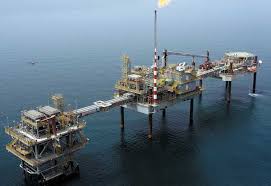
The Middle East was responsible for producing nearly 27.9 million barrels of oil per day in 2014, about 30% of world production. The region includes four of the top eight oil-producing countries in the world and six of the top 14. Most oil production in the Middle East is dominated by state-owned enterprises. However, many international oil companies engage in oil production and related activities across the region through joint ventures, production-sharing agreements and other business models.

1. Saudi Arabia
Saudi Arabia produced more than 11.6 million barrels of oil per day in 2014, nearly 12.5% of world output or about one out of every eight barrels. The country ranked as the world’s biggest oil producer in the decade from 2003 to 2012, after which it fell to second place due to surging oil production in the United States. Saudi Arabia remains the world’s largest petroleum exporter. With proven oil reserves of about 266 billion barrels and relatively low production costs, Saudi Arabia should maintain its position as a top-three oil producer for the foreseeable future.

Saudi Arabia’s oil and gas industry is controlled by Saudi Aramco, which is itself controlled by Saudi Arabia’s Ministry of Petroleum and Mineral Resources and the Supreme Council for Petroleum and Minerals. Saudi Aramco is not publicly traded. Although international oil companies do not participate in oil production in Saudi Arabia, several companies partner with Saudi Aramco in joint-venture refineries and petrochemical plants in the country. These partners include Exxon Mobil Corporation, Royal Dutch Shell plc, Sumitomo Chemical Co., Ltd. and Total S.A.

2. United Arab Emirates
The United Arab Emirates (UAE) is a federation of seven emirates, including Dubai and the capital of the federation, Abu Dhabi. UAE produced nearly 3.5 million barrels of oil per day in 2014 to rank as the world’s sixth-biggest producer. Each of the seven emirates controls oil production within its borders. However, Abu Dhabi is home to about 94% of the proven oil reserves in UAE territory and, thus, it has an outsized role in establishing the federation’s oil policy.

The state-owned Abu Dhabi National Oil Company (ADNOC) controls oil production operations in Abu Dhabi under the direction of the emirate’s Supreme Petroleum Council. Most oil production in Abu Dhabi is organized under production-sharing agreements between ADNOC and international oil companies. Other emirates utilize similar production-sharing agreements and service contracts to organize oil production. Some of the biggest international companies involved in UAE oil production include BP plc, Royal Dutch Shell plc, Total S.A. and Exxon Mobil Corporation.

3. Iran
Iran produced about 3.4 million barrels of oil per day in 2014, the third consecutive year of depressed production. Prior to 2012, Iran produced more than 4 million barrels of oil per day for eight consecutive years. Most of the recent production downturn can be attributed to the effects of international economic sanctions placed on Iran during this period. According to the U.S. Energy Information Administration (EIA), sanctions have had especially severe effects on upstream oil and gas investment, including numerous cancelled investment projects.

In July 2015, Iran came to an agreement with the permanent members of the U.N. Security Council and Germany on the Joint Comprehensive Plan of Action (JCPOA), in which Iran agreed to strict limits on its nuclear program in exchange for the removal of international economic sanctions. As of September 2015, implementation of the agreement on Iran’s part is expected no earlier than the first half of 2016. Once Iran has met all of its initial obligations with respect to the JCPOA, sanctions are to be lifted.

Oil and gas production in Iran is controlled by the state-owned National Iranian Oil Company (NIOC) under the direction of the Supreme Energy Council. While the Iranian constitution bans private or foreign ownership of the country’s natural resources, international companies have historically participated in oil exploration and development in the country through buyback contracts, a contract model that does not convey equity rights to the international company. According to the EIA, Iran is in the process of developing new oil contract models to attract foreign investments once sanctions are lifted. Other reports suggest Iran plans to invite a number of international oil majors to do business in the country, including ConocoPhillips Co., Exxon Mobil Corporation, Royal Dutch Shell plc and Total S.A., among others.

4. Iraq
Iraq produced nearly 3.4 million barrels of oil per day in 2014, just a few thousand barrels per day fewer than Iran. The country has achieved production gains in every year since 2005, two years after the start of the Iraq War. Production in 2014 was higher than any other year since at least 1980, when the country produced just more than 2.5 million barrels per day. The EIA reports that ambitious development plans are in place to increase oil production in Iraq to as many as 9 million barrels per day by 2020. However, the country faces numerous challenges that could limit progress toward these goals, including political instability, continuing violence and inadequate infrastructure.

Oil production in most of Iraq falls under control of the Ministry of Oil in Baghdad. The Ministry operates through several state-owned companies, including the North Oil Company, the Midland Oil Company, the South Oil Company and the Missan Oil Company. In the autonomous Kurdistan region of Iraq, oil production is controlled by the local Ministry of Natural Resources. Well more than a dozen major international oil companies are involved in Iraqi oil production. U.S. and European oil majors include Exxon Mobil Corporation, Occidental Petroleum Corporation, BP plc, Royal Dutch Shell plc and Total S.A. Other international oil giants in Iraq include China National Petroleum Corporation, known as CNPC; China National Offshore Oil Corporation, known as CNOOC; Malaysia’s Petroliam Nasional Berhad, known as Petronas; and Gazprom Neft OAO.

5. Kuwait
Kuwait produced almost 2.8 million barrels of oil per day in 2014, placing it just outside the top 10 oil producers in the world. It has maintained consistent production of between about 2.5 million and 2.8 million barrels per day for more than a decade. However, according to the EIA, Kuwait has been struggling to raise production to 4 million barrels per day during this period, falling short due to inadequate foreign investment and related delays in new oil production projects.

The Ministry of Petroleum carries out oil policy in Kuwait through the state-owned Kuwait Petroleum Corporation and its subsidiaries. International oil companies have long been denied access to Kuwait because the Kuwaiti constitution does not allow foreign companies ownership stakes in Kuwaiti natural resources, or the revenues associated with those resources. This means standard joint ventures and production-sharing agreements used in other countries are outlawed in Kuwait.

In 1988, the Ministry of Petroleum spearheaded a plan to increase oil production in Kuwait by attracting international operators through the use of incentivized contract models allowable under the constitution. However, the country’s National Assembly, which is responsible for approving all such contractual agreements, is not fond of the program and has delayed its implementation for years.