Tag: russian

Russian Japanese War

Japan’s Russian War is a military conflict between Japan and Russia in the Far East. This conflict caused Russia to abandon its expansionary policy in the region and Japan became the first Asian power in modern times to defeat European power.
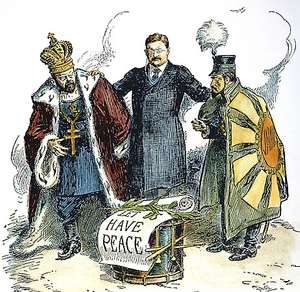
Background of the Japanese Russian War

At the beginning of the 20th century, Russia had become a world power that counts with large areas in Eastern Europe and Central Asia. On the other hand, Japan is seen as a rising Asian power thanks to the Meiji Restoration.

In 1904, the Russian Empire, ruled by the autocratic Tsar Nicholas II, was seen as one of the largest territorial forces in the world.

In that year the Siberian shipping center from Vladivostok was forced to close for months due to winter. Therefore, the empire needed a harbor of warm water in the Pacific Ocean, both for trade purposes and a base for its growing navy.

To overcome this problem, Tsar Nicholas turned his attention to the Korean peninsula and China’s Liaodong. The Russian Empire had rented a port on the Liaodong Peninsula from China known as Port Arthur, but they wanted to have a strong base of operations under their control.

Meanwhile, Japan has paid special attention to Russia’s influence in the East Asian region since the First Sino-Japanese War of 1895. During the war, Russia provided military support to the Qing Empire in China during the conflict, which resulted in two Asian powers clashing with each other other.

With the history of Russian military aggression, at first Japan wanted to find an agreement by offering control of Manchuria, China. In return Japan will continue to maintain its influence over Korea.

However, Russia rejected Japan’s offer and demanded that North Korea from the 39th parallel be used as a neutral zone.

After negotiations failed, Japan chose the path of war by carrying out a surprise attack on the Russian navy at Port Arthur on February 8, 1904.

The Japanese Imperial Navy attack on the Russian Far East Fleet at Port Arthur was designed to intimidate Russian troops.

Under the leadership of Admiral Togo Heihachiro, the Imperial Japanese Navy sent torpedo ships to attack Russian navy ships. The attack damaged three of Russia’s largest ships: Tsesarevich, Retvizan and Pallada.

The next battle from Port Arthur began the next day.

Although the remnants of Russia’s Far East Fleet were largely protected inside the port at Port Arthur, previous attacks had succeeded in preventing Russia from fighting in the open sea. Japan also tried to blockade the port but failed.

Russia did not remain silent, they tried to counter the attack using mines. The counterattack managed to damage two Japanese warships. Nevertheless Japan still showed dominance in Port Arthur and continued to bombard the port with heavy weapons.

The Battle of Liaoyang
After attempts to attack the Russian fort on the ground failed and instead resulted in significant casualties for Japan, the persistence of the Asian forces finally paid off.

At the end of August, troops from northern Russia sent to assist the fleet at Port Arthur were beaten back by the Japanese at the Battle of Liaoyang. The Japanese attack was carried out from a new position obtained on the mainland around the port.

By the end of 1904, the Japanese navy had sunk every ship in the Russian Pacific fleet and had taken control of its garrison on a hill overlooking the harbor.

In early January 1905, Russian Major General Anatoly Stessel, commander of the Port Arthur garrison, decided to surrender because he thought the port was no longer worth defending. The decision surprised the leaders of both parties.

The decision to surrender Stessel, made Japan achieve a significant victory in the war. Meanwhile, Stessel was convicted of treason and sentenced to death for his decision, even though he was finally forgiven.

The Russian Navy also suffered heavy losses during the Battle of the Yellow Sea, forcing imperial leaders to mobilize their Baltic Fleet to the region as reinforcements.

War in Manchuria and Korea
At a time when Russia was disrupted and demoralized, Japanese ground forces began to control the Korean peninsula after landing at Incheon in South Korea now. Within two months, they had taken over Seoul and the entire peninsula.

In late April 1904, Japanese ground forces began planning an attack on Russian-controlled Manchuria in northeast China. During the first ground battle on the Yalu River, Japan launched a successful offensive against Russian Eastern Detachment and forced them to retreat back to Port Arthur in May 1904.

After going through intermittent battles during the Manchuria winter, the next important land battle in the conflict began on February 20, 1905, when Japanese troops invaded Russia in Mukden. The days of hard fighting ensued.

The great battle involved 330,000 Russian troops against 270,000 Japanese troops. This is one of the biggest land battles in history.

At the Battle of Mukden, the Japanese succeeded in pushing Russia and eventually forced them into full retreat. On March 10, after three weeks of fighting, Russia lost a significant number of troops and was pushed back north of Mukden. The loss in this battle was huge, around 89,000 Russians and 71,000 Japanese troops were killed.

Decisive Battle in the Tsushima Strait
Although Japan had achieved important victories during the Battle of Mukden, on the other hand they also suffered significant casualties.

Russian Baltic Fleet reinforcements finally arrived in May 1905, after sailing nearly 20,000 nautical miles – an extraordinary task, especially in the early 1900s – they still faced the daunting challenge of having to navigate the Sea of ​​Japan to get to Vladivostok, with Port Arthur no longer open to them.

To avoid Japanese surveillance, they chose to sail at night. However, Russian reinforcements can still be found by Japan, after a hospital ship turned on their lights in the dark.

Once again under the command of Admiral Togo Heihachiro, the Japanese navy tried to block Russian roads to Vladivostok and resulted in the outbreak of fighting in the Tsushima Strait on May 27, 1905.

On the following day, Russia lost eight battleships and more than 5,000 people. Only three ships finally reached their destination in Vladivostok.

This decisive victory forced Russia to negotiate a peace agreement.

Although Japan had won the war convincingly, the victory was costly, so the state treasury was almost empty. As a result, Japan lacked the negotiating power that could be expected.

Under the terms of the agreement signed by both parties on September 5, 1905, Russia handed over Port Arthur to Japan, while defending the northern part of Sakhalin Island, which is located off the Pacific coast. Russia also agreed to leave Manchuria and recognize Japanese control over the Korean peninsula.

On the financial side Tsar Nicholas refused to pay compensation to Japan. The Tsar’s rejection was supported by Roosevelt. As a result, Japan accused the Americans of deceiving them and anti-American demonstrations in Tokyo appeared.

A series of embarrassing defeats of Russia in the Russo-Japanese War made the Russian Empire lose dignity and increase the Russian people’s hatred of the Tsar’s government. This hatred would later ignite political fire which eventually resulted in the overthrow of the government in the Bolshevik Revolution of 1917.

Although tensions in the region are far from over, the Russo-Japanese War has shifted the balance of global power, marking the first time in modern history that Asians have defeated Europeans in military battles. This war will also mark the start of a war involving world powers in the Pacific region.
The 6 Biggest Russian Energy Companies

The 6 Biggest Russian Energy Companies

Russia ranks high among the top energy-producing countries in the world. According to the most recent industry data available, Russia is the world’s single biggest producer of crude oil, the second-biggest producer of natural gas and the sixth-biggest producer of coal. Russia also ranks as the fourth-biggest producer of both nuclear power and hydropower.

Most of Russia’s biggest energy companies, including global giants such as Gazprom, Rosneft, and Lukoil, operate primarily in the oil and gas industry, with interests spanning the full length of the oil and gas supply chain. However, a hydroelectric power company, RusHydro, also makes a showing on this list of Russia’s biggest energy companies by market capitalization.

1. Gazprom

Gazprom is Russia’s biggest energy company by a substantial margin. The company controls the largest natural gas reserves in the world, from which it produced more than 2.6 billion barrel of oil equivalents (BOE) in 2014, accounting for 72% of Russia’s total gas output for the year. Oil production amounted to about 257 million barrels. Additionally, Gazprom’s gas turbine power plants account for about 15% of Russia’s installed power generating capacity. Gazprom is ultimately controlled by the Russian government, which holds just over 50% of the company’s outstanding shares. Its market capitalization is nearly $50.5 billion.

2. Rosneft

Rosneft is Russia’s biggest oil producer, accounting for more than 40% of total output in 2014. The company reported production of more than 1.5 billion barrels, more than double the production of its closest competitor, Lukoil. Rosneft also produced over 345 million BOE of natural gas, making it the third-largest gas producer in the country. Rosneft has a market capitalization of more than $41 billion. Nearly 70% of its outstanding shares are held by the Russian state.

3. Lukoil

Lukoil produced about 707 million barrels of oil and more than 92 million BOE of natural gas in 2014 to place it firmly in the top tier of Russian energy giants. Like Gazprom and Rosneft, Lukoil controls large gas and oil reserves inside Russia in addition to substantial operations outside the country. Although the company’s power generation assets have grown substantially in recent years, it accounts for less than 1% of the country’s installed generation capacity. Lukoil has a market capitalization of more than $28.3 billion.

4. Surgutneftegas

Although Surgutneftegas has no substantial business operations outside Russia, it ranks among the world’s largest 250 companies in any industry. It reported production of about 447 million barrels of oil and more than 55 million BOE of natural gas in 2014. The company also maintains a power generation business primarily to produce electricity for its own oil and gas production and processing operations. Surgutneftegas has a market capitalization of over $19.2 billion.

5. Tatneft

Tatneft is another integrated oil and gas company with primary operations focused on the domestic market. It is a far smaller producer than its Russian rivals, reporting production of about 193 million barrels of oil and about 5.5 million BOE of natural gas in 2014. Tatneft’s production and refining operations are focused in Tatarstan, a republic in the Russian Federation. Roughly 36% of the company’s outstanding shares are held by the Tatarstan government. Tatneft has a market capitalization of more than $10.6 billion.

6. RusHydro

RusHydro is the biggest hydroelectric power company in the Russian utilities industry. As of 2014, the company has a total installed electricity generation capacity of about 38.5 gigawatts, just less than Gazprom’s 39 gigawatts of installed capacity. RusHydro also has ongoing wind, tidal and geothermal energy projects, many of which are still in the research and development phase. The Russian state holds nearly 67% of outstanding shares in RusHydro. The company has a market capitalization of nearly $3.5 billion.

Here are the 5 biggest Russian oil companies

As the world’s third-largest oil producer and second-largest natural gas producer, Russia is home to some of the biggest integrated oil and gas companies in the world. In fact, Russia’s biggest companies by oil production volume include several mainstays on lists of the world’s biggest companies.

All of Russia’s largest oil companies maintain substantial upstream and downstream oil and gas operations, including sprawling exploration and production divisions, petroleum refineries and petrochemical plants, and retail service stations. The top five oil companies are ranked here according to oil production volume in 2014, the most recent year for which figures are available.

1. Rosneft

Rosneft is Russia’s biggest oil company, with reported production of about 1.5 billion barrels in 2014. The company also ranks as Russia’s third biggest natural gas company, with production amounting to more than 345 million barrel of oil equivalents (BOE). Rosneft has a market capitalization of nearly $38.7 billion, making it the highest publicly valued company in this list.

Rosneft maintains exploration and production activities across Russia and in 10 other countries, including the United States, Canada, Brazil, Norway and Vietnam. It operates 13 refineries in Russia and has an interest in seven additional refineries in Western and Eastern Europe. Rosneft also operates a network of over 2,400 retail gasoline service stations and is Russia’s largest supplier of jet fuel.

2. Lukoil

Lukoil produced nearly 707 million barrels of oil in 2014 and ranked as the second-biggest producer in the country. The company’s natural gas production came in at more than 92 million BOE on the year. It has a market capitalization of more than $27.7 billion.

In addition to gas and oil exploration and production activities across Russia, Lukoil operates in 12 other countries in Europe, Africa and the Middle East. Its refining and petrochemical operations include six refineries in Russia and an interest in five more refineries in New Zealand and Europe. Lukoil also operates power generation facilities in Russia and gasoline service stations in Russia, Europe and the U.S.

3. Gazprom Neft

Gazprom Neft is a subsidiary of the Russian energy giant Gazprom. Although Gazprom Neft has an independent listing on the Moscow Exchange, its parent holds more than 95% of its outstanding shares. The Russian government, in turn, holds 50% of Gazprom shares.

Gazprom Neft produced about 482 million barrels of oil in 2014. Natural gas production amounted to about 104 million BOE during the year. The company has production operations in Russia, Iraq, Venezuela and several other countries. It operates four refineries in Russia and another in Belarus. Nearly 1,750 Gazprom Neft service stations operate in Russia and Europe. Gazprom Neft has a market capitalization of nearly $10.5 billion.

4. Surgutneftegas

Surgutneftegas falls just behind Gazprom Neft with crude oil production of nearly 447 million barrels in 2014. Gas production rose to about 55.3 million BOE on the year. The company’s operations are mostly confined to the domestic market. In addition to its exploration and production activities, the company operates a refinery and a gas processing plant, produces petrochemicals, and runs a power generation business. Surgutneftegas also operates nearly 300 service stations. It has a market capitalization of over $18.5 billion.

5. Tatneft

Tatneft produced almost 193 million barrels of oil in 2014, in addition to gas production of almost 5.5 million BOE. The company produces oil and gas primarily within Russia, although international projects are in development. Tatneft operates a refining and petrochemical complex, a second refining facility and a gas processing plant. A tire manufacturing facility is housed in the refining and petrochemical complex, where a total of 12.5 million tires were produced in 2013. Tatneft distributes refined petroleum products through its network of more than 650 service stations in Russia, Ukraine and Belarus. The company has a market capitalization of more than $9.7 billion.